Showing posts with label Urban Planning. Show all posts

Thursday, February 18, 2010

The Resiliency of Cities.

When you hear the word 'resiliency', what image comes to mind? I think of the civil rights movement, and the people who would not accept a lifestyle as a second-class citizen. I think of my brothers and sisters in the GLBT community who are fighting for their indubitable right to equality in this country. I image the work of political campaigns fighting against all odds, or Olympians training for a lifetime, or a man picking himself up by his bootstraps and making it to the top.

I rarely, however, imagine a city as resilient. But SEED Magazine, a science magazine, wants you to imagine cities as resilient, and they point to the triumph of all American cities as the catalyst for this movement--New Orleans.

Four-and-a-half years ago, Hurricane Katrina plowed into the coast of Louisiana, pummeling New Orleans for eight hours straight with high-speed winds and storm surges reaching 15 feet. Swollen beyond capacity, Lake Pontchartrain spilled into the northern part of the city, and the federal flood protection system, built to protect NOLA from a repeat of Hurricane Andrew, failed in more than 50 places. One day later, nearly every levee in the metro district had been breached, leaving 80 percent of the city underwater.

In the aftermath, Americans watched in disbelief as thousands of newly homeless poured into the Superdome for shelter and TV cameras captured those left behind clinging to rooftops, wading through the streets, and looting empty storefronts. Scenes of destruction, desperation, and poverty, made only more poignant by the overwhelming evidence of official negligence. New Orleanians themselves, as the New York Times put it, were left “terrified, stunned, gasping, speechless.”

But to some scientists, what happened in New Orleans, while devastating, wasn’t very surprising or unexpected. They see a system that was insufficiently robust to handle the blow it was dealt. They see a highly ordered, complex state—commercial districts and neighborhoods, social networks and infrastructure networks, cycles of water, energy, and food consumption—reduced to a state of chaos and disorder. From this perspective, the problem wasn’t merely an incompetent leadership and not enough FEMA trailers. It was a fundamental question of resilience.

Resilience theory, first introduced by Canadian ecologist C.S. “Buzz” Holling in 1973, begins with two radical premises. The first is that humans and nature are strongly coupled and co-evolving, and should therefore be conceived of as one “social-ecological” system. The second is that the long-held assumption that systems respond to change in a linear, predictable fashion is simply wrong. According to resilience thinking, systems are in constant flux; they are highly unpredictable and self-organizing, with feedbacks across time and space. In the jargon of theorists, they are complex adaptive systems, exhibiting the hallmarks of complexity.

A key feature of complex adaptive systems is that they can settle into a number of different equilibria. A lake, for example, will stabilize in either an oxygen-rich, clear state or algae-dominated, murky one. A financial market can float on a housing bubble or settle into a basin of recession. Historically, we’ve tended to view the transition between such states as gradual. But there is increasing evidence that systems often don’t respond to change that way: The clear lake seems hardly affected by fertilizer runoff until a critical threshold is passed, at which point the water abruptly goes turbid.

Resilience science focuses on these sorts of tipping points. It looks at gradual stresses, such as climate change, as well as chance events—things like storms, fires, even stock market crashes—that can tip a system into another equilibrium state from which it is difficult, if not impossible, to recover. How much shock can a system absorb before it transforms into something fundamentally different? That, in a nutshell, is the essence of resilience.

The concept of resilience upends old ideas about “sustainability”: Instead of embracing stasis, resilience emphasizes volatility, flexibility, and de-centralization. Change, from a resilience perspective, has the potential to create opportunity for development, novelty, and innovation. As Holling himself once put it, there is “no sacred balance” in nature. “That is a very dangerous idea.”

Over the past decade, resilience science has expanded beyond the founding group of ecologists to include economists, political scientists, mathematicians, social scientists, and archaeologists. And they have made remarkable progress in studying how habitats—including coral reefs, lakes, wetlands, forests, and irrigation systems, among others—absorb disturbance while continuing to function.

New Orleans, however, presents an interesting example to resilience scientists. If a lake can shift from clear to murky, could a city shift to a dramatically different stable state too? If biodiversity in ecosystems makes them resilient to disturbance, could diversity in urban systems serve a similar purpose? “Cities aren’t dominated by nature to the same extent as things like lakes and wetlands and coral reefs,” says Australian ecologist Brian Walker, “But we wondered, could we look at them in the same way?”

[Click here to read the full article on one page]

Urban Planning is a process. Always. Thus, a systematic approach is necessary, though frequently emotions and bias are interjected into the practice. It's a joy to read an article that approaches the topic systematically yet still objectively, from a scientific viewpoint. It's interesting that both scientists and planners can actually have a lot of common goals and ideas.

New Orleans truly has come far in the past few years, and perhaps these scientists are onto something about its resiliency. Truthfully, however, it is one of the American cities I am very unfamiliar with, since I have only been there one time. Maybe I'll make a visit and check out how resilient the city has in fact become.

The US Infrastructure: What's Wrong with Us?

The United State's infrastructure is terrifying. Terrifying not only because a plethora of disasters and catastrophes could happen in a heartbeat, but because the citizens of the US are completely unaware of the scope of the problem and their representatives are doing nothing to improve the situation.

This is the real situation: infrastructure is the catalyst and sustainer of economic activity. Trade cannot occur where roads do not exist. Jobs cannot be held if electricity and running water are not deliverable. These are simple facts, and yet the US Government has repeatedly cut funding from servicing its infrastructure. From memory I believe the investment of US funds into infrastructure in the 1960s was around 9%. (Unfortunately I do not have the textbook to cite the actual number). Today, it's around 3%. This sharp decline in spending can be seen across the country: the collapse of the bridge in Minneapolis, the failing of the levees in New Orleans, the dilapidated sewer system in Saint Louis, the crumbling bridges in New York and Idaho...it is clear that this country is sending a message, and that message is that they don't care about sustaining its infrastructure.

A good parallel of this is the great city of Rome. In its prime during the Roman Empire it was considered the New York City of today. It was the cultural destination of the world, and it had the finest infrastructure the world had ever seen. The mighty Colosseum had been erected, the great system of aqueducts served the citizens, the roads were intricately planned...yet at one point, the city began to move its focus from these kind of improvements, and look at what happened to it.

In tough economic times, the easy thing to do is push aside infrastructure investments. First off, their value is often not realized, since a bridge or sewer system is rarely looked at as providing tangible utility. (Which itself is an egregious problem, but I won't go there). But we can't have this mentality. When it comes to infrastructure, we can't have a "if it ain't broke, don't fix it" mentality, because it will break. And when it does, there will be hell to pay.

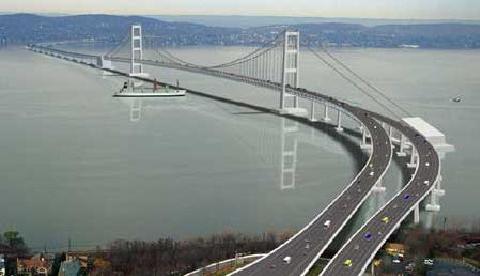
Imagine the northeast corridor without power for three weeks. Imagine an entire metropolitan area without access to clean drinking water because the sewage system failed. Consider a bridge that serves 100,000 people a day, such as the Tappan Zee, collapsing and cutting an artery into the largest city in our country. These are the real, entirely viable issues that our politicians are sweeping under the carpet.

Fortunately, not all of our friends in the Government are ignoring the issue. The Governor of Pennsylvania, Ed Rendell, is featured in an Op-Ed piece in The New York Times titled, "What's Wrong With Us?", and it questions how long we can continue on as a nation without reinvesting in our infrastructure system. It's nice to know that at least one of them gets it.

Gov. Ed Rendell likes to tell a story that goes back to his days as mayor of Philadelphia.

As he recalled, the city had a long cold snap with about a month and a half of below-freezing temperatures. Then, abruptly, the mercury rose into the 60s, he said, “and 58 of our water mains broke, causing all sorts of havoc.”

The pipes were old. Some were ancient. “My water people told me that some had been laid in the 19th century,” said Mr. Rendell, “and they were laid shallow, without much protection. So with any radical changes in temperature, they were susceptible to breaking. We had a real emergency on our hands.”

Infrastructure, that least sexy of issues, is not just a significant interest of Ed Rendell’s; it’s more like a consuming passion. He can talk about it energetically and enthusiastically for hours and days at a time. He has tried to stop the hemorrhaging of Pennsylvania’s infrastructure, and he travels the country explaining how crucially important it is for the United States to rebuild a national infrastructure landscape that has deteriorated so badly that it is threatening the nation’s economic viability.

Two years ago, a bridge inspector who had stopped for lunch in Philadelphia’s Port Richmond neighborhood happened to glance up at a viaduct that carries Interstate 95 over the neighborhood. He noticed a 6-foot crack in a 15-foot column that was supporting the highway. His sandwich was quickly forgotten. Two miles of the highway had to be closed for three days for emergency repairs to prevent a catastrophe from occurring.

These kinds of problems are not peculiar to Pennsylvania. New Orleans was lost for want of an adequate system of levees and floodwalls. Lawrence Summers, President Obama’s chief economic adviser, tells us that 75 percent of America’s public schools have structural deficiencies. The nation’s ports, inland waterways, drinking water and wastewater systems — you name it — are hurting to one degree or another.

Ignoring these problems imperils public safety, diminishes our economic competitiveness, is penny-wise and pound-foolish, and results in tremendous missed opportunities to create new jobs on a vast scale.

Competitors are leaving us behind when it comes to infrastructure investment. China is building a network of 42 high-speed rail lines, while the U.S. has yet to build its first. Other nations are well ahead of us in the deployment of broadband service and green energy technology. We spend scandalous amounts of time sitting in traffic jams or enduring the endless horrors of airline travel. Low-cost, high-speed Internet access is a science-fiction fantasy in many parts of the United States.

The article goes into depth about troubles just his state is facing, much less the rest of the country. But his point is on target--while the rest of the world eclipses this country by constructing massive high-speed rail systems, efficient public transportation systems, renwable green energy and metropolitans with sustainability as a goal...we are just left in the dust. And if we don't do anything about it, we will remain behind, never with the chance to catch up.

Thursday, February 11, 2010

The Snopacolypse and its Urban Planning Implications.

The snopacolypse that has hit the majority of North America has brought my mind to the subject of water management. As the literally thousands upon thousands of miles have been immersed with heaps of snows, it's funny how rarely people think, "Where does it all go?" That's where the topic of urban planning and water management comes into affect.

Water management is the systematic approach to collecting, managing and disposing of stormwater in an efficient, timely manner that is sustainable into the future. (Or, at least that's my definition of it). We have our civil engineers to deeply offer our gratitude to for designing streets and sewer systems that effectively collect and dispose of the water in such an effortless way that it doesn't even cross our minds. We gripe about all of this snow, but imagine what it was like 100 years ago! The mud and sludge remained for months at a time. It took the planners, engineers and architects to coordinate a comprehensive plan in order to effectively tackle the elements. My hats off to them.

All of that say, a fantastic piece from urban re:vision magazine shows the variety of water uses and stormwater management practices. It features highlights of Chicago, San Francisco, Portland and Orange County to specifically how they are planning to keep up with the increase in water demand.

In Portland, Oregon, rows of sedge plantings and aspen trees sit on what used to be an asphalt parking lot. In Las Vegas, homeowners trade their lawns for vast wads of cash. Birds flying over Chicago see fields of sedum on rooftops, and wastewater in Orange County is transformed into water that’s as clean as what comes out of the tap. The common thread to all of these examples? A desire to better manage water.

A new report released last fall by consulting firm McKinsey & Company declares that by 2030, the world’s water demands will have increased by 40%. Add to that the fact of rising seas, droughts, and shrinking water sheds, and cities across the country are starting to respond with some particularly innovative solutions tailor-made to their varied water needs.

Other cities are taking their green above street level. Chicago is perhaps the recognized leader in this area, with a green roof grant initiative program since 2005 of up to $5,000, a city hall topped with crabapple trees and honeysuckle vines included among its 20,000 plants, and more than 600 green roofs totaling 7 million square feet throughout the city. Seattle, Portland, Toronto, and New York are all ramping up their own green roof programs, offering tax incentives, code requirements, and building allowances through their various cities. At the same time, tree planting has become another popular move towards soaking up rainwater naturally—as well as beautifying streets. New York City recently launched MillionTreesNYC , an initiative that plans to put a million trees throughout the city’s five boroughs over the next decade, and Portland gives “treebates” and free trees through their city program , hoping to line streets with the waving branches of native alder, fir, maple, and madrone.

As Benjamin Franklin once wrote, “When the well is dry, we know the worth of water.” It would be disastrous if we let ourselves get to that point. Perhaps if we follow these cities’ leads and look to the future, we will understand the value of water before it’s both literally and proverbially too late.
The full article is much grander in scope, and it really reminds us how we often take simple things like clean air and access to clean water for granted. It's incredibly myopic, and incredibly typical, of us in the west to complain about the most ridiculous things such as cold coffee or a line for the ATM. We frequently forget that 2 billion people on this planet do not have access to clean drinking water, nor do they ever even have the hope for an education or for a better future. We should all remember that next time we open our mouths and begin to complain.

Thursday, January 14, 2010

Vancouver: Has it Achieved its Dream?

Traveling to Vancouver was one of the greatest experiences of my life. I consider it a world city on par with London, Paris, New York City and Chicago. It's a city planner's dream: dense living with mixed-use developments in every direction. However, as the term 'Vancouverism' has spread, how has the actual plan of Vancouverism worked out? Is it the urban utopia that it is heralded to be? The LA Times reports that not all is harmonious in British Columbia.

He and one of his students at the University of British Columbia in Vancouver in the 1990s pioneered a way of measuring the connection between human population and its consumption of resources. It's known as the "ecological footprint." Ominously, Rees found that the 2.2 million people who live in the Vancouver region would need an area 57 times larger than their own city to sustain them. Indeed, if everyone on Earth lived as people in Vancouver did, Rees calculated, it would take four planets to keep them alive.

That message resonated, and it changed Rees' adopted city. To a degree probably unmatched anywhere else in North America, the city of Vancouver has tried to impose notions of sustainability in its decisions on what, where and how to build.

The result has come to be known as "Vancouverism," an urban motif of public transit instead of freeways, a low-carbon energy infrastructure and gleaming high-rise condominium towers in sunlit, walkable neighborhoods laced with urban parks.

The 2010 Winter Olympic Games next month provide a showcase for how Vancouver is trying to evolve. A $1-billion development that houses the athletes' village generates up to 70% of its power from converted sewage, and the vaulted ceiling of the Richmond speed-skating venue emphasizes that most renewable of resources, wood.

Over the last 20 years, Vancouver has managed to more than double the number of people living downtown while also reducing its carbon emissions per capita to the lowest levels of any big city in North America. The central city has refused to allow a single freeway and recently began to further tighten the noose around automobiles, closing lanes on crowded streets in favor of buses, bikes and sidewalks.

The city has hit up developers to build parks, recreation centers, libraries, day-care centers, and open, public waterfronts to a degree almost unknown anywhere else.

When other cities were erecting warehouse-style retail outlets in the hinterlands, Vancouver built its Costco right downtown -- the first urban Costco in the world, with four 40-story residential towers rising from the top. There's a boutique Home Depot not far away and a Safeway that squats on a second floor, above smaller street-level shops.

The 1908 Woodward's department store building is being revamped into a mix of high-priced condos, housing for the homeless, a contemporary art institute, grocery store, drugstore and day-care center -- all on a single city block, topped by a mini-replica of the Eiffel Tower. "Be bold," said a sign erected at the site, "or move to suburbia."

"We've become the North American model that you can't ignore," said city planning director Brent Toderian. "We're the only North American downtown to have opened a new elementary school -- think about it -- and we're about to open another one. And it's not because we're all utopians here. It's a willingness to have vision, and then back it up with regulation and willpower."

But the new Olympic athletes' village -- a lower-slung eco-village with narrow, European-style streets and green-planted roofs that hardly resembles the city's famous high-rises -- demonstrates the degree to which Vancouver planners have discovered shortcomings in their own magic.

Forests of glass high-rises are a bit monotonous, many residents now complain.

The new downtown is also a victim of its own success: the condos with the good views are so sought-after that they often cost several million dollars. Even the cheaper studios routinely hit $350,000. How can young families afford those kinds of prices?

The city recently suspended new condo conversions in some areas until job centers catch up. The region's top four employers are various agencies of the government -- troubling in a region that long ago shut down most of its resource economy, such as logging.

With downtown housing costs so high, the suburbs have grown relentlessly. For every new downtown resident, four others have moved to the vast, Orange County-like expanse of the Fraser Valley.

And then there's the traffic: Without freeways, auto commuters are confined to endless queues until they hit the Trans-Canada Highway outside the city. Transit use is high and getting better, but riding in from the far reaches of the Fraser Valley, 35 miles from downtown, can mean one or two long bus trips before reaching the first rail station.

"If you look at the real numbers . . . you'll discover that Vancouver's share of growth uptake in the region is actually diminishing as a proportion," said Lance Berelowitz, who edited the city's Olympics bid package and wrote the book "Dream City: Vancouver and the Global Imagination."

The whole article delivers far more insight into the dichotomy that faces Vancouver, but the effort of Vancouverites shouldn't be dismissed. While they are working towards uniting a city towards environmental efficiency, most cities in North America are just acting as if there isn't a problem at all. And in general, the problems posed towards the Vancouver region really aren't dilemmas with city planner, but with economics. Simple supply-and-demand curves are what are causing the housing prices to go so high--and, as a broad statement, this is a good thing. Housing is expensive in places where people want to live. Why do you think the cost of living is so low in Cleveland, Detroit and St. Louis?

Vancouver is at least taking the active role, instead of the passive role. They are quite aware of their impact on their region and the world and are diligently working to improve their city's efficiency. How many American cities can say the same?

Monday, January 11, 2010

Dubai: A City Planner's Nightmare.

Planning is a process. New York City did not spring up over night. In fact, parts of the city began as a putrid quagmire that few thought ever would turn into a livable conditions--much less one of the world's premier cities. But that's what good city planning is about: creating a plan so that the world will transform from where it is to where it ought to be.

Dubai, however, is an example of a city that has taken the planning process and thrown it out the window. To hell with conventions, we'll dazzle 'em with big architecture and no one will ever notice the abysmal transportation system... Well, now that the Burj Dubai (renamed the Burj Khalifa) towers over the UAE like a might trophy for all to see, people are beginning to notice Dubai--and what a disaster it is.
Your polite, epaulette-wearing cabdriver screeches down a 12-lane highway and -- with the tower in plain sight -- he goes miles past it, leading you to wonder whether he's lost his way or is ripping you off. Only when he finally reaches an interchange and then doubles back to the tower do you realize what's going on: Dubai wins no medals for urban planning.

A tour of this once-booming Persian Gulf city-state, which has shifted into low development gear from hyper-drive, reveals a disturbing disconnect between its architectural spectacle and its short-sighted development practices. Dubai's ultra-modern transit line, which opened last year, is a significant exception. Yet the emirate and its leaders appear obsessed with architectural superlatives at the expense of the fundamentals -- or even the fine-grained art -- of making livable cities.

Take the palm-shaped, artificial island (above) that adds to Dubai's short supply of lucrative coastal real estate and forms one of the emirate's iconic images. The island is a miraculous engineering achievement, formed by dredged sand and constructed with the aid of a global positioning system. Yet the only way to get a pleasing overview of its thin, frond-like strips of sand is to look at a map or charter a helicopter

At ground level, the fronds are packed with high-priced villas while the stemlike road leading to them is lined with monolithic rows of hulking apartment buildings. These look as though they were designed by architectural refugees from East Germany who added a few Islamic touches.

Multiply this gap between image and reality a hundredfold and you have the Dubai that was taking shape before the global recession of 2008 and the emirate's debt crisis. It is a city of isolated enclaves, lacking convenient connections to one another, and brutal linear strips, exemplified by the eyesore high-rises along the emirate's main drag, a superwide highway called Sheikh Zayed Road.

...

It is not as though Dubai doesn't know how to make good cities. Its old downtown, located along the creek that bespeaks the emirate's fishing village and trading post origins, is a charmer, with arcaded old marketplaces, or souks, and picturesque wooden water taxis ferrying Dubaians back and forth across the creek.

Here are age-old lessons of walkable streets, mixed uses and the use of aged buildings that form still-relevant models for planning cities. The trouble is that these models have been trampled upon in the rush to create the ugly, Houston-style, car-oriented city of office parks and commercial strips that stretches for mile after mile along Sheikh Zayed Road. The patches of the urban quilt desperately need to be stitched together.
Dubai has fascinated me for years, but I have never had the yearning desire to see it for myself. Perhaps it's because a gay atheist won't fit well in a country where Islam is the official religion and homosexuality is punishable with prison time. That might have something to do with it. But even more so, I've wondered for a few years now--is it sustainable? As Dubai has soared up in the past decade, can it take a turn like a bell curve and crumble at the same speed it went up?

Sunday, October 4, 2009

"Booze, Guns and the Rise in Rural Suicide"

It was a long time ago that I took Sociology 100, but I remember learning that suicides were always in higher percentages in small states than large states. My Professor showed us how Wyoming has an incredible number of people offing themselves, and yet in New York the per capita numbers make it look like it never happens.

Anyway, this article seems to not only reinforce this, but it actually says its getting worse!

Attempted and completed suicides take place at higher rates in rural communities, especially in areas that have more bars and taverns than other rural places, according to a new study.

The numbers of suicides were highest among white men.

Suicide rates were higher in both urban and rural places with concentrations of bars and taverns, according to the report by Fred Johnson, Paul Gruenewald and Lillian Remer. The authors speculate that a wide range of factors contributed to higher suicide rates in rural areas, including widespread use of firearms, local economic problems and alcoholism. Three out of four rural suicides involved firearms, according to the report.

The study shows a sudden and sharp increase in the rural suicide rate beginning a generation ago. In the early 1970s, suicide rates of rural men exceeded the urban rate by just 4%. But by the late 1990s, the suicide rate for rural men exceeded the urban rate by 54%.

Check out the link for more on how they conducted the study.

My love for cities and city development goes beyond just the aesthetics of a skyline and the incredible alacrity that comes over me when I'm in the heart of a metropolis--if I boil it all down, it comes down to opportunity for community. Within a city you have the ability to create your own version of what you experience. Take Columbus. To some, there is the Buckeye/Ohio State Columbus, the city that has 'the best damned band in the land' and the football team that squashes Michigan (6 years in a ROW!). To others, they have the fancy downtown and the arts districts. To the gays, Columbus is a unique surprise, an unexpected liberal haven tucked in the center of such a fickle state. To someone like me, I view it as a temporary home--a place I will always look back on fondly. The bottom line is we all view it differently, and yet it is the exact same place.

In small, rural areas, there isn't that ability to re-create your own village. When you have 1200 people in a town and nothing for 50 miles in any direction, it is what it is and you just accept it. This lack of mobility and diversity in a community is really the destruction of community, and it's one of the main reasons why suicides are so frequent there. If you can't find friends, if you can't find your community, if no one knows if you exist...why bother? Why keep going? Would anyone even know you were gone in the first place?

More Rail Options in DC!

There are many, MANY reasons whyI do not like Ohio, but the lack of rail options is by far one of the biggest. Organizations like All Aboard Ohio are working hard to change this, but for now the reality still exists--if you're in Columbus, there ain't shit for transportation options. And this affects what Urban Planners define as "Transportation Behavior", which is the belief that your surrounding area,not your personal preference, will control which transportation mode you select. For example, you would be deemed insane if you were living in Westerville and decided to walk to work in Reynoldsburg. On the flip side, that's about the same distance between College Park, MD and Washington, DC--and thousands upon thousands of people use the bus and Metro system to make that journey. Why the change? Because frankly driving to DC is a pain in itself, and the parking fees are so astronomical that taking the metro is way more convenient! Here in Ohio we don't have those options, and because of this our transportation behavior is solely single-use automobile.

So, now get this. Virginia is about to launch rail service from Lynchburg to Washington DC, and it's part of a test to see how VA would benefit from more rail options. Why can't this happen here in the Buckeye State?
Virginia launches its first state-funded intercity passenger train Thursday from Lynchburg to Washington, a move that will enhance mass-transit options for Northern Virginia commuters and people across the state.

The new service is part of a $17.2 million, three-year pilot program the state is running, and fully funding, to determine whether enhanced rail service is viable in Virginia. The pilot program will offer two trains, one from Richmond and one from Lynchburg, that will travel to Union Station and then on to Boston. Service between the Virginia terminuses and Washington will include stops at some Virginia Railway Express stations; service between Washington and Boston will include stops in Philadelphia and New York.

However, the train set to run from Richmond will not launch until Dec. 15 because the necessary infrastructure improvements -- about $78 million worth -- are not complete, said Jennifer Pickett, a spokeswoman for the Virginia Department of Rail and Public Transportation. She noted that $43 million in improvements were completed so that the Lynchburg service could begin.

"This is a pilot project. It is the beginning of something, not the end of something," said Sharon Bulova (D), chairman of the Fairfax County Board of Supervisors. "We are going to see this grow."
It's sad that in one of the largest cities in the US (Columbus), there is no intercity rail service, nor is there any kind of commuter rail whatsoever. If Lynchburg, VA can get it (and St. Cloud, MN; Madison, WI; Portland, OR; etc.)...why can't we?

Sunday, August 16, 2009

The Abandoned 8.

Abandonment is a universal fear that permeates across humanity. The fear of abandonment puts troubled individuals through years of counseling, ruins relationships, tests families, forces companies to never fully trust their employees...and it also is the biggest fear for a city that wants to remain vibrant.

Ohio is not isolated from abandonment. Flocks of people are abandoning Cleveland, Youngstown, Dayton and Zanesville (to name a few), only to leave empty streets and dilapidated structures. Nothing destroys a town more than collective abandon--and these 8 cities are the paradigm of this urban planning nightmare.


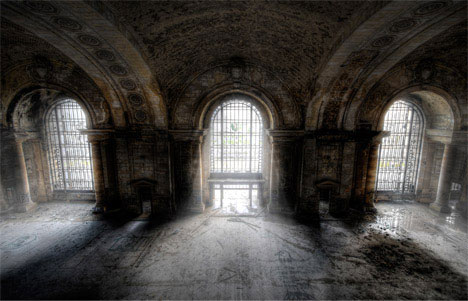
This photo comes from the icon of a failing city--Detroit, Michigan. Once a glorious triumph of the American spirit, Detroit now stands as a beacon of failure and demise. The Michigan Central Station, in the picture above, was the world's tallest train station when it operated. It was designed by the same men who crafted New York's Grand Central Station, and it embraced that same essence. Now, it is bound to sit in desolation and wait for its doom.

The article link above features the other cities, including cities in Germany, China and Italy. It's interesting to know that abandonment is not just an American problem.

Wednesday, August 12, 2009

Cars, Density and Public Transportation.

Ugh. This article right here is the reason why I'm so pressed on leaving this country.
It's hard to appreciate how truly pitiful our public transportation system is until you spend some time with a system that works.
Oh, there's more to that article--but just go read it. It'll certainly begin to get your blood boiled.

The first half of the article circles around the devastating truth about this nation--the reality that public transportation will almost never be universally accessible. We love our cars, and we're too damn fat to consider taking a hike to work instead of driving our gas-guzzling vehicles to our fat office chairs.

I have preached it for years, and no one likes it. But it's the truth. If we ever want to get Americans out of their cars, we need to raise the entire cost of owning a car. And that begins with raising gas taxes, toll prices, parking fees...raise them all! Few reasonable people drive in a place like Manhattan, and that's because it's frankly faster to use the subway than to try to bother with driving. If we want that same Manhattan-connectedness throughout this country, it'll have to start with making it supremely inconvenient to drive.

Why am I so obsessed with public transportation? For one, it's far more economical. And I don't mean financially--I mean the supply-and-demand of land! Ever consider how much space highways, roads, parking garages and cars take up? My lord it's a huge waste of space. Having people commute to work, social functions, etc., via a collective effort is simply better for the development of cities. It's long-term sustainability.

It is also, clearly, the healthier route to pursue. New Yorkers walk around 5-miles a day, while the average American doesn't even make it to a single mile. And you know what? Americans are freaking huge, they could surely use a 5-mile walk.

Efficiency about public transporation may be in question, because there are many systems in this country that do not run efficiently (COTA bus would be one great example). But as more people ride the transportation systems, the easier they are to become more convenient. The difficulty lies in getting people to push the system to a point where they must expand.

The first bit of the article focuses on the dim future for public transportation in The United States (::angry face::) and the second part reviews American's hatred for high-density neighborhoods (::really angry face::).
David Boyce, an adjunct professor of civil and environmental engineering at Northwestern University, said another key piece of the puzzle is land use. Americans prefer low-density communities and large lots for their homes.

This may be swell from a quality-of-life perspective, but it's an enormous challenge for public transportation, which requires relatively large numbers of people moving from point A to point B on a daily basis to be profitable.

...

I hate to be cynical, but I simply can't imagine political leaders at the local, state or federal level telling voters that they support a big increase in gas taxes, sky-high parking fees and high-density neighborhoods.

So don't hold your breath for a public transportation system that rivals what our friends abroad enjoy. It's not going to happen -- at least not until a majority of us agree that we're prepared to accept the trade-offs necessary to bring about such a wholesale change in how we live and travel.
Baby Jesus on a cross, do you see why I am love with this article? It's like I wrote it myself! Words right from my own lips!

No one is going to find me holding my breathe for these kinds of developments, and I'm frankly just not committed to this country enough to be part of the movement towards this ideal. This country won't let me serve in our armed forces, won't let me marry the love of my life, won't even give me legal recognition in the majority of the states...so where's the incentive to stay? It's certainly not the crazy gun laws or the lack of access to health care! It's not our impressive education system or the upcoming generation of idiots that this nation is brewing up right now! Hell, I can't even give blood in this friggin' country...so as a clearly unequal citizen of The US, I honestly, from my viewpoint, find almost no reason at all to stay here.

There is plenty wrong with this country and I'll be the first to point it out. But at the same time, I will be here for at least 1-2 more years at the minimum; 5-7 years at the most. So although it's fun and easy to write up a quick rant about the atrocities of this country...perhaps I should make the best of my time? Instead of whining and complaining as the next few years go by, why don't I do my own small part to make things better? That's a far better approach than to relentlessly bitch about how awful it is here.

Sigh...the only problem is it's easier said than done.

Tuesday, August 11, 2009

Thoughts On The Outside.

Someone was asking me the other day specifically why I think suburbs are the downfall and ruin of this country. Their defense was that technology has provided people with the ability to own both worlds--the world of the city and the world of their own. Interesting argument, because I personally believe the opposite.

First off, suburbs are simply a reflection of our auto-dependent lifestyle. His point about technology paving the way for these type of developments is spot on. However, what he fails to realize is the sustainability of these types of structures. No one likes to admit it, but there is a simple supply-and-demand equation when it comes to oil. Demand will continue to rise as our nation continues to grow. (Projected to be 450 million Americans by 2050). However, the supply of oil is a very specific amount, a number that is pretty difficult for us to predict. Nevertheless, when that peak hits and oil production slows down, what will we be left with? An immobile country, that's what.

Gas right now is at a comfortable $2.60 a gallon (in Ohio). But what happens in five or so years when we will be paying $8 or $9 per gallon? Will we still be able to drive 30 or 40 miles to work? Will big box industries still be able to sweep all of their transportation costs under the carpet? Will travel still be as easy and affordable? The answer is a quite obvious NO to all of these questions. And if we continue to plan and develop suburbs that circle the center city, we are planning for our own destruction.

So, to get back to the topic at hand, I believe suburbs are the ruin of this country because they will not be able to exist forever. On top of their future bleak outlook, as they stand today they are horrendous for the development of real communities. Notice how there are rarely sidewalks? It's because the developers want you to drive everywhere. And if you're isolated in your car instead of walking the streets, you're alone. And, to follow the cycle, if you're alone you're not making friends. You aren't establishing relationships. There is no community when you park in the garage and never step foot towards your neighbors house.

As a note, I have no problem with neighborhoodss that are outside of the center city. I myself don't live downtown, and it would be a ridiculous assertion to say that everyone must live in a skyscraper. That's not my point here. What I am getting at is the typical type of development that American cities are seeing 20, 30 or even up to 50 miles outside of where people work. This type of development is just plain awful, and it goes beyond just the lack of community and the dependence on the automobile. Why maintain ten mini-cities with tax dollars when, if the city was denser, you could support just one? This one point alone is enough to make me cringe.

Columbusites spend millions of dollars maintaining Westerville, Lancaster, Marysville, Polaris, Grove City...all of these large areas 20 or so miles outside of downtown, and it just doesn't make any sense. We wouldn't need 15 different fire departments or police stations if we just moved the people closer together. Think of all the roads that must be maintained, or the schools, or the streets, or the stoplights, etc. etc. If we didn't have a land of suburbs we wouldn't need to pay for these things over and over again--and thus our city could function far better.

But people argue that they enjoy having their own space. And that's understandable--but it's just not practical. One of the very basic tenants of good urban planning is Jane Jacobs' idea of "Eyes on the Street". Our sidewalks and streets are the fundamental building blocks of our cities. They are what make people feel safe--and this simple feeling is the determinant of a successful city or a failing one.

So how does one create safe streets? Well, simple--eyes on the street. Have coffee shops with big patios, get runners, parents with their kids, people walking their dogs...activity is where it's at! But this activity goes vis-a-vis with that safety factor, and its by no means an easy equation. But it's an imperative one. Suburbs by nature cannot create this vibrancy or this level of activity. Their low-density and exclusionary practices keep a homogeneous group of citizens and an inactive feel to them.

Let's make a recap--suburbs cannot be maintained because of their dependence of the soon-to-be-costly automobile. Suburbs to a fault destroy the ability to create communities. Suburbs guzzle tax-dollars because of their low-density yet high-maintenance requirements. Suburbs do not create the kind of activity that favors low-crime and high-likability.

But wait, there's more!

The actual planning of suburbs is just atrocious. It's bad enough that they just turn into a sea of cookie-cutter homes, but do the planners really have to design the roads so disgustingly? I mean, who actually likes driving out in the burbs? Planners just seem to hate grids in suburbs, but grids are frequently what is most efficient. Sure, grid style developments leads to cars cutting through side-streets, but I'd rather have that than the ugly and uninspired crap that planners shit out these days.

That's my case. I fully believe that one cannot attain a high-quality of life when they're commuting 30 miles to work or school everyday. I do not believe in any capacity that the American suburbs are sustainable developments which will continue to be well-maintained in the far future. At the same time, if you personally enjoy the suburbs, who am I to point and tell you to move? If you're happy, then ignore this whole post. My only concern is for the collective future of this country, and I truly question what kind of place it will be when the central cities continue to fail and then the suburbs go down with them.

Saturday, August 8, 2009

After What We Destroyed.

So you know what really grinds my gears? I was thinking about this the other day, and the irony burns. Ever notice that those stupid suburban developments that look like Playdough Cities are always named after what was destroyed in order to build them? Think about it. Their names are always like "Green Meadows" or "Forever Pastures". They thought up those names because of what had to be leveled in order to throw up their cookie cutter houses! Why would we want nature or beauty when we could have an identical copy of all of our neighbors' homes?

Monday, June 8, 2009

My Nightmare.

I really wish this photo was a joke...but it's not.


Why would anyone ever want to live like this? I realize I'm a little drastic with my only-dense-city-living ideals, but there are still plenty of alternatives to my ideals that are practical. Grandview, Bexley, Upper Arlington...they're all great areas with beautiful houses that are just minutes from the city. But this kind of development? It happens 30 miles outside of the central city. Its homogeneity is painful. Its impracticality is nearly palpable. I just don't get why people would willfully choose to live like this.

Sunday, April 19, 2009

Madison, Wisconsin.

I found this incredible photo of Madison on Wikipedia. I seriously think Madison, Wisconsin is one of the most unique cities in the United States. Wedged between two enormous lakes, Madison is a densly populated yet very-small city that seems to balance an eclectic amount of culture within a conservative farming state (even if they went for Obama!). The people there are so diverse, and the University is one of the highest performers in the amount of research in this country. (UW-Madison is my second pick for grad school). State Street is a long pedestrian-only street packed with restaurants, shops and bars. It's so strange to me that a metro area with around half-a-million people can still function so well and be so peculiar!


Madison was designed by the legendary Urban Planner John Nolen. The man seemed to be everywhere in his life, and I can't think of a single planning class I have taken where his name has not come up.


Anyway, enjoy the photo.

Tuesday, February 10, 2009

Welcome, Columbus Commons.

Take a guess what this is...


The final phase of Columbus Commons, the plan that replaces the currently dead City Center! Downtown Columbus has all the news you need. The following image is of the first phase, scheduled to be finished in 2010 and cost between $15 -$20 million.

Update: Stimulus Projects.

I have long been critical of the lack of information regarding the Economic Stimulus Plan. Every time President Obama has thrown out numbers I have been waiting for the cold, hard facts regarding these numbers.

Thanks to Stimulus Watch, I can finally feel satisfied. This website is tracking the spending plans of the stimulus by state or city and by project type:
The scope of this stimulus package is terrifying. I'm not sure whether I'm afraid of the cost or afraid of the implications--the revelation of just how bad the American infrastructure really is.

Monday, February 9, 2009

Shocking: New York Ain't Cheap!

Manhattan is in trouble. Research from the Center for an Urban Future has revealed that New York City is simply to effing expensive.
For much of its history, New York City has thrived as a place that both sustained a large middle class and elevated countless people from poorer backgrounds into the ranks of the middle class. The city was never cheap and parts of Manhattan always remained out of reach, but working people of modest means—from forklift operators and bus drivers to paralegals and museum guides—could enjoy realistic hopes of home ownership and a measure of economic security as they raised their families across the other four boroughs. At the same time, New York long has been the city for strivers—not just the kind associated with the highest echelons of Wall Street, but
new immigrants, individuals with little education but big dreams, and aspiring professionals in fields from journalism and law to art and advertising.

In recent years, however, major changes have greatly diminished the city’s ability to both retain and create a sizable middle class. Even as the inflow of new arrivals to New York has surged to levels not seen since the 1920s, the cost of living has spiraled beyond the reach of many middle class individuals and, particularly, families. Increasingly, only those at the upper end of the middle class, who are affluent enough to afford not only the sharply higher housing prices in every corner of the city but also the steep costs of child care and privateschools, can afford to stay—and even among this group, many feel stretched to the limits of their resources. Equally disturbing, even in good times, the city’s economy seems less and less capable of producing jobs that pay enough to support a middle class lifestyle in New York’s high-cost environment.

The current economic crisis, which has arrested and even somewhat reversed the skyrocketing price of housing, might offer short-term opportunities to some in the market for homes. But the mortgage meltdown and its aftermath will not change the underlying dynamic: over the past three decades, a wide gap has opened between the means of most New Yorkers and the costs of living in the city. We have seen this dynamic play out even during the last 15 years, as the local economy thrived and crime rates plummeted.

Despite these advances, large numbers of middle class New Yorkers have been leaving the city for other locales, while many more of those who have stayed seem permanently stuck among the ranks of the working poor, with little apparent hope of upward mobility.

This is a serious challenge for New York in both good times and bad. A recent survey found the city to be the worst urban area in the nation for the average citizen to build wealth. For the first time in its storied history, the Big Apple is in jeopardy of permanently losing its status as the great American city of aspiration.
New York Daily News summarized the report with these findings:
  • A New Yorker would have to make $123,322 a year to have the same standard of living as someone making $50,000 in Houston.
  • In Manhattan, a $60,000 salary is equivalent to someone making $26,092 in Atlanta.
  • You knew it was expensive to live in Manhattan, but Queens? The report tagged Queens the fifth most expensive urban area in the country.
  • The average monthly rent in New York is $2,801, 53% higher than San Francisco, the second most expensive city in the country.
  • New Yorkers paid about $34 a month for phone service in 2006. In San Francisco, similar service cost $17 a month.
  • Home heating costs have jumped 125% in the past five years and are up 243% since 1998.
  • Full-time day care costs can run up to $25,000 a year for one child, depending on the neighborhood, or about as much as some college tuitions.
  • Meanwhile, wages in the city have remained mostly flat in all boroughs but Manhattan — even during the boom years from 2003 to 2007.


I have never desired to live in New York, which is strange considering how much I love enormous cities. NYC is just too much for me though. I'm quite satisfied with the Mini-apple over the big apple :-P.

Thursday, February 5, 2009

Moose!


Face it--you wish you were Moose. I know you do. Any sane person would immediately trade places with a moose. Why do I say so? Well, because they are just the coolest animal ever. (And if you don't agree then shut up! You're wrong, I'm right, end of story! :-P )

So if you've ever been curious about where Moose live throughout the country, here is a nifty GIS application called "GAP Analysis" that lays out precisely where all the moose have been hiding. Unfortunately, the ONE state that I'm obsessed with does not have information here. No fair! They have fricking Wyoming but not Minnesota. Boo! (Especially since tons of Moose are in Minnesota).

The same GAP Analysis has plenty more information from this link here. You basically can retrieve any type of geographic information pertaining to a state--unless it's Minnesota. (Again, boo you guys!) Unfortunately since Ohio is such a lame state there is very little information. Sorry, not my fault guys.

Thursday, January 29, 2009

Top Ten Suburbs.

This article isn't really worth a full update, but if you're interested in unique suburbs--those exist?--than here is a list of places throughout the country that are doing things differently.

Monday, November 24, 2008

Time to Axe Daylight Savings Time.

Doctor David Levinson, Professor of Civil Engineering at University of Minnesota, has been studying the effects of daylight's savings time on transportation systems. When I met with him over the summer, he brought me to his computer lab and showed me some of the computer applications where he studies whether daylight savings kills people or not. If you're into technical journals, his publication on the issue can be read here. In the end, Daylight Savings Time does more damage than good.

And with this information comes the call for Barack Obama to try axing the tradition of Daylight Savings altogether. Originally implemented as an energy conservation policy back in World War I, the act has shown to not conserve energy, but tedious and even increase the rate of traffic fatalities. By reducing the hours of sleep for drivers in the spring, think of the countrywide impacts--304 million Americans all with an hour less of sleep. While on the local level it seems like a negligible argument, on the aggregate scale it is worth considering.

What do you think? Should we get rid of Daylight Savings Time? Here is one opinion. I'm not sure what Dr. Levinson would have to say about this, though.