
So I've been meaning to post this on ye olde blog here, but alas I never stop working. And when I do stop working, I go explore the city...and don't feel like blogging. Can't blame me, right? Eh, I hope to write some stories and get them up here soon. We'll see though! :-)
Anyway, this is kind of a sad song. Have you ever desperately wondered how someone you once loved is doing, but at the same time you knew you couldn't bring them back into your life? That's what this song is about. I hope you enjoy.
Thursday, September 30, 2010

Tuesday, August 17, 2010
Pain.
The last entry was about pain. Fitting. I wrote this song a year ago and it's called Pain. I'd like to share it with you.
Saturday, July 17, 2010
Beauty.
There's something so soothing about pain. Maybe it's because without pain we wouldn't know what excitement or love would feel like. Maybe it's because it's the painful and hard times that build us. Or maybe it's because I know that this too will pass.
Either way, I am bigger than this. I am stronger than this. And I am beautiful...in every single way.
Either way, I am bigger than this. I am stronger than this. And I am beautiful...in every single way.
Monday, July 12, 2010
Perspective.
When was the last time you looked at the clouds and tried figuring out what they were? I did the other day, and it was amazing. It began with me pointing up and saying the broad, tall cloud was a rooster, and then I thought perhaps it was supposed to be an elephant. And I stared in awe as that elephant trampled across the sky, colliding with the other clouds and transforming into an enormous falcon. That marvelous falcon spread its wings, and in lightning speed it appeared to engulf the entire sky in its wingspan. I gazed as this masterpiece unfolded, seeming to transport myself to an entirely new world.
In a blink of an eye that falcon vanished, and in its place was a massive white hole in the sky, blending in with the rest of the blotches that went on as far as my eyes could see. The thought hadn't crossed my mind that instead of celestial beings dancing in the sky, what I really saw were thousands of droplets of water culminating together in one suspended aggregation. What to my perspective was a wild story unveiling was to another person's perspective mere, forgettable science.
People can look at a cloud and see a rooster, an elephant or the simple process of water vapor congregating in the sky. But it's those differences in perspectives that builds us, helps us, unites us...or destroys us.
In a blink of an eye that falcon vanished, and in its place was a massive white hole in the sky, blending in with the rest of the blotches that went on as far as my eyes could see. The thought hadn't crossed my mind that instead of celestial beings dancing in the sky, what I really saw were thousands of droplets of water culminating together in one suspended aggregation. What to my perspective was a wild story unveiling was to another person's perspective mere, forgettable science.
People can look at a cloud and see a rooster, an elephant or the simple process of water vapor congregating in the sky. But it's those differences in perspectives that builds us, helps us, unites us...or destroys us.
Thursday, June 3, 2010
Renewal.
I just renewed the domain on this ole' blog here for another 5 years.
Now that I did just that, I guess I better start updating again.... ;-)
Now that I did just that, I guess I better start updating again.... ;-)
Monday, May 10, 2010
Almost There!
For four years I've been waiting to see this...

...June 13th--graduation--here I motherfuckin' come!

...June 13th--graduation--here I motherfuckin' come!
Tuesday, April 27, 2010
Thursday, April 22, 2010
Praise Jesus! I'll Give Him a 50!
One time growing up my parents took me to this church back in the DC area; I think it was called Emmanuel Church or something. Anyway, it was a sermon very similar to the stuff in this video, and I remember the preacher ended by saying, "I won't end this service until someone writes me a $2,000 check."
Needless to say, seconds later someone walked down and wrote him a $2,000 check.
Wednesday, April 7, 2010

Monday, April 5, 2010
You Ain't a Single Lady!
This video had me laughing hysterically and I nearly fell over! Good thing I didn't, cause I would not look cute in a cast.
Monday, March 15, 2010
Repost: "Separate and Equal."
It's finals week and I'm cramming like WHOA, but something made me think of this post from a year-and-a-half ago, and I wanted to re-share it with all of you. Enjoy.
(Originally written on November 6th, 2008 after Proposition 8 passed in California)
This is a contract between Gay America and Christian America.
Since I am gay and thus a second-class American citizen, I have a proposal. After watching the "love of Christ" in California with the hateful, anti-family, anti-American, bigoted, fear-mongering, deceptive and downright evil Proposition 8, I'll give in--fine. You win. I am just fine being a second-class citizen. I will never ask to be viewed as "equal" in the eyes of the states. I will never fight for my right to marry, or to adopt children, or to serve in the military. I will make my life completely separate from yours.
But I want you to stop living off of the fruits of my labor.
Since you value-voting Christians tell me that I am dirty heathen undeserving of the right to a happy marriage and children of my own, I'm going to stop paying for your schools. I'll do the math and figure out how much Franklin County gives to our schools here, and I'll be deducting that from my taxes. Since roughly 30 million Americans are gay, I doubt the schools will notice the few billion dollars they lose.
Now I work in a restaurant, so if you happen to be in my station, let's work something out from here--don't tip me, because you won't be getting service from me. I will not answer questions about the menu. I will not greet your table. You can get your own drinks. The computer system is pretty easy to navigate, so once you're ready to order just walk up and start punching the items in. (Don't make a mistake, though! You'll have to pay for that if you do.) And there are a few soda machines throughout the restaurant, so you should be fine topping off your own Diet Coke.
When your son knocks on my door and asks me to donate for new uniforms for the basketball team, I hope you'll be prepared to watch the door slam in his face. And when your little Girl Scout tries to sell me cookies, imagine her running back to you crying saying, "He said he won't buy cookies because you hate him!"
Oh, you best believe I won't be buying from them.
Also, as part of this contract, you'll never be able to see a Broadway Show again. Sorry. The symphony is out the window, too. You cannot go to The Ballet, you cannot see Cats for your anniversary again, and you will never be able to even play the Wicked CD in your car. Never. Because, I hope you know, these joys that you delight in are the fruit of gay Americans, and since you do not want to believe those kind of dirty people exist, we'll work it out for you. I'll round us all up and put us on an Island.
We'll call in Manhattan.
You cannot read David Sedaris, Anne Rice, Gregory McGuire, Virginia Woolf, Emily Dickinson, Christopher Rice, Truman Capote, Oscar Wilde or Walt Whitman. You cannot listen to Tchaikovsky, N'Sync, Clay Aiken, The Village People, Luther Vandross, Melissa Etheridge, or Jean Baptiste Lully. And I'm sure Cher and Madonna will make it so you can't listen to their music, either.
Also, do you remember the fundamental Keynes Economic Theory? A major foundation of the American economy? You'll have to give that back, too, since he was a big old fag.
You cannot watch Will and Grace, The Simpsons, Ugly Betty, South Park, Sex and the City, 30 Rock, Arrested Development, Sordid Lives, Buffy: The Vampire Slayer, Brothers & Sisters, Six Feet Under, Ellen, Dawson's Creek or The View. In fact, you might as well turn off your television and never watch it again, since the gays pretty much run the media too.
And your children can never read Harry Potter, since Dumbledore is gay too.
When you buy your new big house in the suburbs and you're looking for the best interior designers, your quest is going to be awfully long. When you're sick and the Doctor tells you, "so sorry, not you,", it's going to be a painful extra few hours sitting in the waiting room. And if war ever comes to this country, I hope you know, and that your children know, that I will do nothing to help you. I won't sign up to serve and protect you. I won't even shed a tear.
You win. We will leave you alone. Gay America will disappear. This is what you wanted.
Or is it?
(Originally written on November 6th, 2008 after Proposition 8 passed in California)
This is a contract between Gay America and Christian America.
Since I am gay and thus a second-class American citizen, I have a proposal. After watching the "love of Christ" in California with the hateful, anti-family, anti-American, bigoted, fear-mongering, deceptive and downright evil Proposition 8, I'll give in--fine. You win. I am just fine being a second-class citizen. I will never ask to be viewed as "equal" in the eyes of the states. I will never fight for my right to marry, or to adopt children, or to serve in the military. I will make my life completely separate from yours.
But I want you to stop living off of the fruits of my labor.
Since you value-voting Christians tell me that I am dirty heathen undeserving of the right to a happy marriage and children of my own, I'm going to stop paying for your schools. I'll do the math and figure out how much Franklin County gives to our schools here, and I'll be deducting that from my taxes. Since roughly 30 million Americans are gay, I doubt the schools will notice the few billion dollars they lose.
Now I work in a restaurant, so if you happen to be in my station, let's work something out from here--don't tip me, because you won't be getting service from me. I will not answer questions about the menu. I will not greet your table. You can get your own drinks. The computer system is pretty easy to navigate, so once you're ready to order just walk up and start punching the items in. (Don't make a mistake, though! You'll have to pay for that if you do.) And there are a few soda machines throughout the restaurant, so you should be fine topping off your own Diet Coke.
When your son knocks on my door and asks me to donate for new uniforms for the basketball team, I hope you'll be prepared to watch the door slam in his face. And when your little Girl Scout tries to sell me cookies, imagine her running back to you crying saying, "He said he won't buy cookies because you hate him!"
Oh, you best believe I won't be buying from them.
Also, as part of this contract, you'll never be able to see a Broadway Show again. Sorry. The symphony is out the window, too. You cannot go to The Ballet, you cannot see Cats for your anniversary again, and you will never be able to even play the Wicked CD in your car. Never. Because, I hope you know, these joys that you delight in are the fruit of gay Americans, and since you do not want to believe those kind of dirty people exist, we'll work it out for you. I'll round us all up and put us on an Island.
We'll call in Manhattan.
You cannot read David Sedaris, Anne Rice, Gregory McGuire, Virginia Woolf, Emily Dickinson, Christopher Rice, Truman Capote, Oscar Wilde or Walt Whitman. You cannot listen to Tchaikovsky, N'Sync, Clay Aiken, The Village People, Luther Vandross, Melissa Etheridge, or Jean Baptiste Lully. And I'm sure Cher and Madonna will make it so you can't listen to their music, either.
Also, do you remember the fundamental Keynes Economic Theory? A major foundation of the American economy? You'll have to give that back, too, since he was a big old fag.
You cannot watch Will and Grace, The Simpsons, Ugly Betty, South Park, Sex and the City, 30 Rock, Arrested Development, Sordid Lives, Buffy: The Vampire Slayer, Brothers & Sisters, Six Feet Under, Ellen, Dawson's Creek or The View. In fact, you might as well turn off your television and never watch it again, since the gays pretty much run the media too.
And your children can never read Harry Potter, since Dumbledore is gay too.
When you buy your new big house in the suburbs and you're looking for the best interior designers, your quest is going to be awfully long. When you're sick and the Doctor tells you, "so sorry, not you,", it's going to be a painful extra few hours sitting in the waiting room. And if war ever comes to this country, I hope you know, and that your children know, that I will do nothing to help you. I won't sign up to serve and protect you. I won't even shed a tear.
You win. We will leave you alone. Gay America will disappear. This is what you wanted.
Or is it?
Wednesday, February 24, 2010
My Final Spring Break.
That title is incorrect, because 'final' infers that there has been more than one. There has not. I am a slave to the restaurant industry, and I have worked a full-time job the entire time I have been in school. Every spring break I have worked, and as this is my senior year, I say Enough!. So I'm stopping in Charlotte for a night, then trekking to Atlanta to run the ING Georgia Half-Marathon and then traveling down to Fort Lauderdale for a real, live vacation. Fortunately I will be able to fly back since a friend just moved there and I am simply taking him his car!

Now, technically, I did visit Minnesota last March. But does an adventure to the coldest, most winter-abused state in the country really count as a "Spring Break"?


Now, technically, I did visit Minnesota last March. But does an adventure to the coldest, most winter-abused state in the country really count as a "Spring Break"?


Thursday, February 18, 2010
The Resiliency of Cities.
 When you hear the word 'resiliency', what image comes to mind? I think of the civil rights movement, and the people who would not accept a lifestyle as a second-class citizen. I think of my brothers and sisters in the GLBT community who are fighting for their indubitable right to equality in this country. I image the work of political campaigns fighting against all odds, or Olympians training for a lifetime, or a man picking himself up by his bootstraps and making it to the top.
I rarely, however, imagine a city as resilient. But SEED Magazine, a science magazine, wants you to imagine cities as resilient, and they point to the triumph of all American cities as the catalyst for this movement--New Orleans.
Four-and-a-half years ago, Hurricane Katrina plowed into the coast of Louisiana, pummeling New Orleans for eight hours straight with high-speed winds and storm surges reaching 15 feet. Swollen beyond capacity, Lake Pontchartrain spilled into the northern part of the city, and the federal flood protection system, built to protect NOLA from a repeat of Hurricane Andrew, failed in more than 50 places. One day later, nearly every levee in the metro district had been breached, leaving 80 percent of the city underwater.
In the aftermath, Americans watched in disbelief as thousands of newly homeless poured into the Superdome for shelter and TV cameras captured those left behind clinging to rooftops, wading through the streets, and looting empty storefronts. Scenes of destruction, desperation, and poverty, made only more poignant by the overwhelming evidence of official negligence. New Orleanians themselves, as the New York Times put it, were left “terrified, stunned, gasping, speechless.”
But to some scientists, what happened in New Orleans, while devastating, wasn’t very surprising or unexpected. They see a system that was insufficiently robust to handle the blow it was dealt. They see a highly ordered, complex state—commercial districts and neighborhoods, social networks and infrastructure networks, cycles of water, energy, and food consumption—reduced to a state of chaos and disorder. From this perspective, the problem wasn’t merely an incompetent leadership and not enough FEMA trailers. It was a fundamental question of resilience.
Resilience theory, first introduced by Canadian ecologist C.S. “Buzz” Holling in 1973, begins with two radical premises. The first is that humans and nature are strongly coupled and co-evolving, and should therefore be conceived of as one “social-ecological” system. The second is that the long-held assumption that systems respond to change in a linear, predictable fashion is simply wrong. According to resilience thinking, systems are in constant flux; they are highly unpredictable and self-organizing, with feedbacks across time and space. In the jargon of theorists, they are complex adaptive systems, exhibiting the hallmarks of complexity.
A key feature of complex adaptive systems is that they can settle into a number of different equilibria. A lake, for example, will stabilize in either an oxygen-rich, clear state or algae-dominated, murky one. A financial market can float on a housing bubble or settle into a basin of recession. Historically, we’ve tended to view the transition between such states as gradual. But there is increasing evidence that systems often don’t respond to change that way: The clear lake seems hardly affected by fertilizer runoff until a critical threshold is passed, at which point the water abruptly goes turbid.
Resilience science focuses on these sorts of tipping points. It looks at gradual stresses, such as climate change, as well as chance events—things like storms, fires, even stock market crashes—that can tip a system into another equilibrium state from which it is difficult, if not impossible, to recover. How much shock can a system absorb before it transforms into something fundamentally different? That, in a nutshell, is the essence of resilience.
The concept of resilience upends old ideas about “sustainability”: Instead of embracing stasis, resilience emphasizes volatility, flexibility, and de-centralization. Change, from a resilience perspective, has the potential to create opportunity for development, novelty, and innovation. As Holling himself once put it, there is “no sacred balance” in nature. “That is a very dangerous idea.”
Over the past decade, resilience science has expanded beyond the founding group of ecologists to include economists, political scientists, mathematicians, social scientists, and archaeologists. And they have made remarkable progress in studying how habitats—including coral reefs, lakes, wetlands, forests, and irrigation systems, among others—absorb disturbance while continuing to function.
New Orleans, however, presents an interesting example to resilience scientists. If a lake can shift from clear to murky, could a city shift to a dramatically different stable state too? If biodiversity in ecosystems makes them resilient to disturbance, could diversity in urban systems serve a similar purpose? “Cities aren’t dominated by nature to the same extent as things like lakes and wetlands and coral reefs,” says Australian ecologist Brian Walker, “But we wondered, could we look at them in the same way?”
Urban Planning is a process. Always. Thus, a systematic approach is necessary, though frequently emotions and bias are interjected into the practice. It's a joy to read an article that approaches the topic systematically yet still objectively, from a scientific viewpoint. It's interesting that both scientists and planners can actually have a lot of common goals and ideas.
New Orleans truly has come far in the past few years, and perhaps these scientists are onto something about its resiliency. Truthfully, however, it is one of the American cities I am very unfamiliar with, since I have only been there one time. Maybe I'll make a visit and check out how resilient the city has in fact become.

The US Infrastructure: What's Wrong with Us?
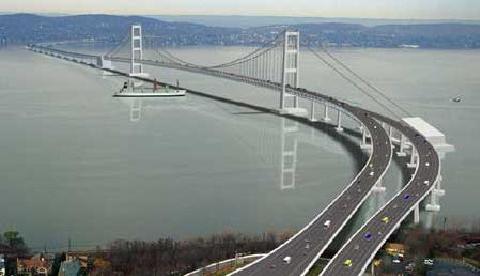 The United State's infrastructure is terrifying. Terrifying not only because a plethora of disasters and catastrophes could happen in a heartbeat, but because the citizens of the US are completely unaware of the scope of the problem and their representatives are doing nothing to improve the situation.
This is the real situation: infrastructure is the catalyst and sustainer of economic activity. Trade cannot occur where roads do not exist. Jobs cannot be held if electricity and running water are not deliverable. These are simple facts, and yet the US Government has repeatedly cut funding from servicing its infrastructure. From memory I believe the investment of US funds into infrastructure in the 1960s was around 9%. (Unfortunately I do not have the textbook to cite the actual number). Today, it's around 3%. This sharp decline in spending can be seen across the country: the collapse of the bridge in Minneapolis, the failing of the levees in New Orleans, the dilapidated sewer system in Saint Louis, the crumbling bridges in New York and Idaho...it is clear that this country is sending a message, and that message is that they don't care about sustaining its infrastructure.
A good parallel of this is the great city of Rome. In its prime during the Roman Empire it was considered the New York City of today. It was the cultural destination of the world, and it had the finest infrastructure the world had ever seen. The mighty Colosseum had been erected, the great system of aqueducts served the citizens, the roads were intricately planned...yet at one point, the city began to move its focus from these kind of improvements, and look at what happened to it.
In tough economic times, the easy thing to do is push aside infrastructure investments. First off, their value is often not realized, since a bridge or sewer system is rarely looked at as providing tangible utility. (Which itself is an egregious problem, but I won't go there). But we can't have this mentality. When it comes to infrastructure, we can't have a "if it ain't broke, don't fix it" mentality, because it will break. And when it does, there will be hell to pay.
Imagine the northeast corridor without power for three weeks. Imagine an entire metropolitan area without access to clean drinking water because the sewage system failed. Consider a bridge that serves 100,000 people a day, such as the Tappan Zee, collapsing and cutting an artery into the largest city in our country. These are the real, entirely viable issues that our politicians are sweeping under the carpet.
Fortunately, not all of our friends in the Government are ignoring the issue. The Governor of Pennsylvania, Ed Rendell, is featured in an Op-Ed piece in The New York Times titled, "What's Wrong With Us?", and it questions how long we can continue on as a nation without reinvesting in our infrastructure system. It's nice to know that at least one of them gets it.
Gov. Ed Rendell likes to tell a story that goes back to his days as mayor of Philadelphia.
As he recalled, the city had a long cold snap with about a month and a half of below-freezing temperatures. Then, abruptly, the mercury rose into the 60s, he said, “and 58 of our water mains broke, causing all sorts of havoc.”
The pipes were old. Some were ancient. “My water people told me that some had been laid in the 19th century,” said Mr. Rendell, “and they were laid shallow, without much protection. So with any radical changes in temperature, they were susceptible to breaking. We had a real emergency on our hands.”
Infrastructure, that least sexy of issues, is not just a significant interest of Ed Rendell’s; it’s more like a consuming passion. He can talk about it energetically and enthusiastically for hours and days at a time. He has tried to stop the hemorrhaging of Pennsylvania’s infrastructure, and he travels the country explaining how crucially important it is for the United States to rebuild a national infrastructure landscape that has deteriorated so badly that it is threatening the nation’s economic viability.
Two years ago, a bridge inspector who had stopped for lunch in Philadelphia’s Port Richmond neighborhood happened to glance up at a viaduct that carries Interstate 95 over the neighborhood. He noticed a 6-foot crack in a 15-foot column that was supporting the highway. His sandwich was quickly forgotten. Two miles of the highway had to be closed for three days for emergency repairs to prevent a catastrophe from occurring.
These kinds of problems are not peculiar to Pennsylvania. New Orleans was lost for want of an adequate system of levees and floodwalls. Lawrence Summers, President Obama’s chief economic adviser, tells us that 75 percent of America’s public schools have structural deficiencies. The nation’s ports, inland waterways, drinking water and wastewater systems — you name it — are hurting to one degree or another.
Ignoring these problems imperils public safety, diminishes our economic competitiveness, is penny-wise and pound-foolish, and results in tremendous missed opportunities to create new jobs on a vast scale.
Competitors are leaving us behind when it comes to infrastructure investment. China is building a network of 42 high-speed rail lines, while the U.S. has yet to build its first. Other nations are well ahead of us in the deployment of broadband service and green energy technology. We spend scandalous amounts of time sitting in traffic jams or enduring the endless horrors of airline travel. Low-cost, high-speed Internet access is a science-fiction fantasy in many parts of the United States.
The article goes into depth about troubles just his state is facing, much less the rest of the country. But his point is on target--while the rest of the world eclipses this country by constructing massive high-speed rail systems, efficient public transportation systems, renwable green energy and metropolitans with sustainability as a goal...we are just left in the dust. And if we don't do anything about it, we will remain behind, never with the chance to catch up.
Wednesday, February 17, 2010
Reality TV, Contracts and Confidentialy Clauses.
 The way my mind operates is to consider the mechanics of what's going on behind the scenes. (It's probably why Logistics/Supply-Chain Management is a perfect career for me.) For example, when I'm watching an awards show, I'm curious about all of the details--and no, not the dresses or fashion. Instead, I want to know which company was selected for the lighting, and what the contract entailed. I want to know who decides what style of carpet to use, and why they selected it.
So when I watch reality TV shows, although I'm enjoying what's going on, I'm reviewing the business behind them, such as the product placement, the contracts with corporate sponsors and of course, the contracts with the contestants. I'm curious to how they live their lives between the time they're kicked off and the time their final episode airs. Do they live in seclusion so they don't let the cat out of the bag? Or do they remain working with the show, although not actually on it? In a world of Facebook and Twitter, how easy it would be for a contestant to slip-up and let the winner be known, and subsequently, owe the producers millions-upon-millions.
A very non-thorough search of Google yielded me this article which goes over the contracts and liabilities of Reality TV shows. It's a cool Contracts Blog by Contracts Law Professors. The article is from 2005, but still, it seems to raise some serious questions.
Like most (all?) "reality" TV shows, the Apprentice TV show imposes a contractual gag order on participants covering every aspect of the participant's experience. The contract couples that covenant with a liquidated damages clause requiring participant-breachers to pay $5 million plus attorneys' fees and disgorge their profits.
In 2001, a similar clause was invoked in a Survivor dispute (Survivor and Apprentice are both produced by Mark Burnett). Then, last week, this clause was invoked again agaist two Apprentice participants (Markus and Jennifer W.) due to their public claims that the show's editing is misleading and that The Donald is sexist.
I've always found the gag order + liquidated damages clause in these reality TV show agreements problematic for three reasons:
1) The $5M liquidated damages should be prima facie unenforceable because it does not vary with the type of breach. There's a wide range of public disclosures that might occur, some significant (blowing the entire season by preannouncing the winner) and some trivial (such as a snarky comment about Trump's choice of ties). A one-size-fits-all liquidated damages clause does not appear to represent a reasonable estimate of the damages in these different contexts.
Even if the clause is not a penalty, I wonder if it violates public policy. There's no question that the agreement could protect the producers' trade secrets, but the clauses often go far beyond that, limiting participants' abilities to discuss their experiences, criticize the show or even enforce their legal rights. At some point, extensive gag orders violate public policy. See, e.g., People v. Network Associates, Inc., 195 Misc. 2d 384 (N.Y. Sup. Ct. Jan 6, 2003) (enjoining the use of a clause prohibiting product reviews and product comparisons of anti-virus software).
2) Liquidating the damages has the perhaps-unintended consequence of capping the TV show producer's damages. If a participant disclosure really blew the entire season, would $5M be enough?
3) I believe that liquidating damages significantly reduces the likelihood of getting injunctive relief. (After all, it's hard to argue that damages are insufficient if the parties have agreed upon damages in the contract). So, if the TV show producers ever tried to stop publication of unwanted disclosures, I wonder if the liquidated damages clause would sink any chance of equitable relief.
For these reasons, I would think the TV show producers (and their lawyers) would know better than to include such a high-risk clause in their contracts. On the other hand, despite its legal shakiness (and its even-more-dubious prospects for producing judgments that could be collected), the clause nevertheless may be effective at deterring unwanted behavior. After all, what participant wants to test the clause at the peril of being wrong and on the hook for $5M?
Recently American Idol contestant Michael Lynche was booted from the Top 24 because his father broke loose the news he had made it to the Top 24. Can you imagine family dinners after your father ruined your one shot at stardom? AWKWARD...
Tuesday, February 16, 2010
That Unforgettable Halloween.
It was 4 PM on the night of my fraternity's Halloween party, and I still did not have a costume. "So you're just not going to dress up?" My friend Jenny asked me.
"Well, I guess so. What else can I do?" I said.
"Isn't there anything you have?"
And then it hit me. There was something. A year prior I had stumbled across a deformed and undesirable Halloween costume at a thrift store. I was with my friend Daniel when we saw what was clearly a "naughty nurse" for the 6th grade schoolgirl with no friends. It was made of the cheapest pleather money could buy and fashioned with pink stitching featuring skulls scattered across it. There was an embroidered saying on the left side of the dress, 'Poison', with a girly skull and cross-bones stabbing through it. I'm sure every Avril Lavigne fan had their own personal seamstress to make it fit perfectly on them.
"Daniel, it's only $2!" I screeched.
"Oh, it's so ugly. If you don't buy it, I will."
And so I bought it. It then hung on a hanger in a dark closet for well over a year without me giving it the slightest thought. Until that moment. I looked at Jenny and said, "You know what, I do have something. It will be perfect."
Fishnets, high-heels, fake lashes, a pound of make-up and a neon pink wig later, I was ready to make my appearance at the Halloween party as a Hooker from the Moulin Rouge.
One's reaction to this heinous Halloween eyesore could only be described as spiking Hawaiian Punch with a pint of paprika. Every face was either shock, awe, horror or complete admiration--not because the costume was impressive, but because the audacity to be seen in public like that certainly deserved a pat on the back.
I headed straight for the bar, and kept my glass full all night. And like any night that involves a heavy amount of drinking, the party was a blast. But this story isn't about the party, nor the costume. It's about the morning after. And the moments in-between.
Face-down on the floor, I woke up in the middle of a completely vacant apartment. The sensation of crusted marinara on my fingertips immediately brought memories from a late-night trip to a Taco Bell/Pizza Hut, and the surrounding crumples of bean burrito bags was the further proof. (Fortunately Halloween is the only night a man can walk into a Taco Bell in a pleather dress and pink wig and not get looks from the patrons, otherwise this story would be about being a victim of a hatecrime.)
I managed to open my painfully drunken eyes to realize I was in my friend Greg's apartment. I had recently helped him move out and managed to still have the key, so during the night it appeared that breaking into his old apartment and staying on the empty floor was a grand idea. Naturally.
Before crashing on his carpet, I managed to finagle my way out of the dress and ball it up with the pink wig to use it as a pillow. Subsequently during the night the pleather caused my face to sweat and the make-up to bleed down my face, and if I hadn't looked like a Hooker the night before, I certainly looked like one now.
As I went to pick myself up, the pain of a cruel hangover shot throughout my body. It took me ten minutes to gather the strength--and the balance--to make it to my feet. And once I was up, the most nerve-wrenching thought hit me with the intense reality: I had to walk home like this.
My hair was in shambles. The fishnets were torn up and down my legs. I had streams of mascara and eyeliner running down my face. One of the heels was broken. And in my bloated condition, there was no way I could fit back into that damned pleather dress. As if there was some cruel trickster trying to make this predicament as humiliating as possible, remember that I woke up in a place where my friend had just moved out of. There wasn't as much as a can of tuna in that place, much less a jacket or a pair of jeans just lying around.
Except one thing. One hideous, miserable, terrifically embarrassing thing. In my friend's closet hung a bright fluorescent green robe with the texture of a towl and imprinted margaritas adorned all over it. Given to him as a gag gift, it was the one and only thing remaining in that apartment unit.
And so I began my quest. Without touching my hair, washing the marinara off my hands or attempting to fix the bleeding mascara, I swung the robe around me, put on my broken heels and started trudging through the utter humiliation to make it back home, all the while dragging the pink wig and pleather dress along with me. Cars slowed to catch a glimpse of me, and even a few honked their horns. While I could have hid my face or tried to run away, I lifted my chin high and took pride in this moment of surreal liberation. Because, on the morning after Halloween, I wasn't alone. Down the sidewalk, off in the distance, walked someone in just an equally embarrassing situation.
Thank you, humility.
"Well, I guess so. What else can I do?" I said.
"Isn't there anything you have?"
And then it hit me. There was something. A year prior I had stumbled across a deformed and undesirable Halloween costume at a thrift store. I was with my friend Daniel when we saw what was clearly a "naughty nurse" for the 6th grade schoolgirl with no friends. It was made of the cheapest pleather money could buy and fashioned with pink stitching featuring skulls scattered across it. There was an embroidered saying on the left side of the dress, 'Poison', with a girly skull and cross-bones stabbing through it. I'm sure every Avril Lavigne fan had their own personal seamstress to make it fit perfectly on them.
"Daniel, it's only $2!" I screeched.
"Oh, it's so ugly. If you don't buy it, I will."
And so I bought it. It then hung on a hanger in a dark closet for well over a year without me giving it the slightest thought. Until that moment. I looked at Jenny and said, "You know what, I do have something. It will be perfect."
Fishnets, high-heels, fake lashes, a pound of make-up and a neon pink wig later, I was ready to make my appearance at the Halloween party as a Hooker from the Moulin Rouge.
One's reaction to this heinous Halloween eyesore could only be described as spiking Hawaiian Punch with a pint of paprika. Every face was either shock, awe, horror or complete admiration--not because the costume was impressive, but because the audacity to be seen in public like that certainly deserved a pat on the back.
I headed straight for the bar, and kept my glass full all night. And like any night that involves a heavy amount of drinking, the party was a blast. But this story isn't about the party, nor the costume. It's about the morning after. And the moments in-between.
Face-down on the floor, I woke up in the middle of a completely vacant apartment. The sensation of crusted marinara on my fingertips immediately brought memories from a late-night trip to a Taco Bell/Pizza Hut, and the surrounding crumples of bean burrito bags was the further proof. (Fortunately Halloween is the only night a man can walk into a Taco Bell in a pleather dress and pink wig and not get looks from the patrons, otherwise this story would be about being a victim of a hatecrime.)
I managed to open my painfully drunken eyes to realize I was in my friend Greg's apartment. I had recently helped him move out and managed to still have the key, so during the night it appeared that breaking into his old apartment and staying on the empty floor was a grand idea. Naturally.
Before crashing on his carpet, I managed to finagle my way out of the dress and ball it up with the pink wig to use it as a pillow. Subsequently during the night the pleather caused my face to sweat and the make-up to bleed down my face, and if I hadn't looked like a Hooker the night before, I certainly looked like one now.
As I went to pick myself up, the pain of a cruel hangover shot throughout my body. It took me ten minutes to gather the strength--and the balance--to make it to my feet. And once I was up, the most nerve-wrenching thought hit me with the intense reality: I had to walk home like this.
My hair was in shambles. The fishnets were torn up and down my legs. I had streams of mascara and eyeliner running down my face. One of the heels was broken. And in my bloated condition, there was no way I could fit back into that damned pleather dress. As if there was some cruel trickster trying to make this predicament as humiliating as possible, remember that I woke up in a place where my friend had just moved out of. There wasn't as much as a can of tuna in that place, much less a jacket or a pair of jeans just lying around.
Except one thing. One hideous, miserable, terrifically embarrassing thing. In my friend's closet hung a bright fluorescent green robe with the texture of a towl and imprinted margaritas adorned all over it. Given to him as a gag gift, it was the one and only thing remaining in that apartment unit.
And so I began my quest. Without touching my hair, washing the marinara off my hands or attempting to fix the bleeding mascara, I swung the robe around me, put on my broken heels and started trudging through the utter humiliation to make it back home, all the while dragging the pink wig and pleather dress along with me. Cars slowed to catch a glimpse of me, and even a few honked their horns. While I could have hid my face or tried to run away, I lifted my chin high and took pride in this moment of surreal liberation. Because, on the morning after Halloween, I wasn't alone. Down the sidewalk, off in the distance, walked someone in just an equally embarrassing situation.
Thank you, humility.
Thursday, February 11, 2010
The Snopacolypse and its Urban Planning Implications.
 The snopacolypse that has hit the majority of North America has brought my mind to the subject of water management. As the literally thousands upon thousands of miles have been immersed with heaps of snows, it's funny how rarely people think, "Where does it all go?" That's where the topic of urban planning and water management comes into affect.
Water management is the systematic approach to collecting, managing and disposing of stormwater in an efficient, timely manner that is sustainable into the future. (Or, at least that's my definition of it). We have our civil engineers to deeply offer our gratitude to for designing streets and sewer systems that effectively collect and dispose of the water in such an effortless way that it doesn't even cross our minds. We gripe about all of this snow, but imagine what it was like 100 years ago! The mud and sludge remained for months at a time. It took the planners, engineers and architects to coordinate a comprehensive plan in order to effectively tackle the elements. My hats off to them.
All of that say, a fantastic piece from urban re:vision magazine shows the variety of water uses and stormwater management practices. It features highlights of Chicago, San Francisco, Portland and Orange County to specifically how they are planning to keep up with the increase in water demand.
The full article is much grander in scope, and it really reminds us how we often take simple things like clean air and access to clean water for granted. It's incredibly myopic, and incredibly typical, of us in the west to complain about the most ridiculous things such as cold coffee or a line for the ATM. We frequently forget that 2 billion people on this planet do not have access to clean drinking water, nor do they ever even have the hope for an education or for a better future. We should all remember that next time we open our mouths and begin to complain.
In Portland, Oregon, rows of sedge plantings and aspen trees sit on what used to be an asphalt parking lot. In Las Vegas, homeowners trade their lawns for vast wads of cash. Birds flying over Chicago see fields of sedum on rooftops, and wastewater in Orange County is transformed into water that’s as clean as what comes out of the tap. The common thread to all of these examples? A desire to better manage water.
A new report released last fall by consulting firm McKinsey & Company declares that by 2030, the world’s water demands will have increased by 40%. Add to that the fact of rising seas, droughts, and shrinking water sheds, and cities across the country are starting to respond with some particularly innovative solutions tailor-made to their varied water needs.
Other cities are taking their green above street level. Chicago is perhaps the recognized leader in this area, with a green roof grant initiative program since 2005 of up to $5,000, a city hall topped with crabapple trees and honeysuckle vines included among its 20,000 plants, and more than 600 green roofs totaling 7 million square feet throughout the city. Seattle, Portland, Toronto, and New York are all ramping up their own green roof programs, offering tax incentives, code requirements, and building allowances through their various cities. At the same time, tree planting has become another popular move towards soaking up rainwater naturally—as well as beautifying streets. New York City recently launched MillionTreesNYC , an initiative that plans to put a million trees throughout the city’s five boroughs over the next decade, and Portland gives “treebates” and free trees through their city program , hoping to line streets with the waving branches of native alder, fir, maple, and madrone.
As Benjamin Franklin once wrote, “When the well is dry, we know the worth of water.” It would be disastrous if we let ourselves get to that point. Perhaps if we follow these cities’ leads and look to the future, we will understand the value of water before it’s both literally and proverbially too late.
Subscribe to:
Comment Feed (RSS)


 Posts
Posts


