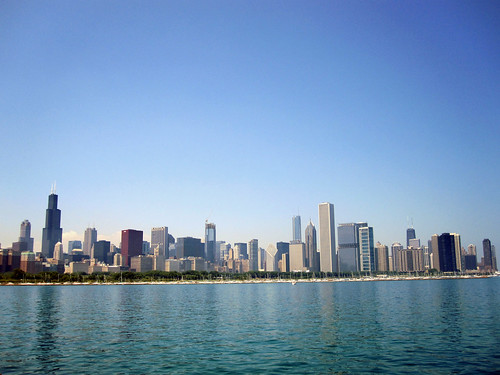
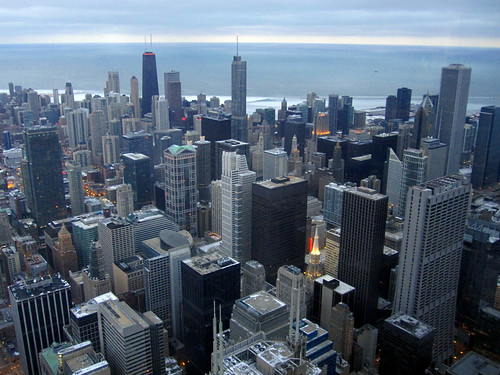
In just a few months I'll be here! The alacrity is building...

Your polite, epaulette-wearing cabdriver screeches down a 12-lane highway and -- with the tower in plain sight -- he goes miles past it, leading you to wonder whether he's lost his way or is ripping you off. Only when he finally reaches an interchange and then doubles back to the tower do you realize what's going on: Dubai wins no medals for urban planning.Dubai has fascinated me for years, but I have never had the yearning desire to see it for myself. Perhaps it's because a gay atheist won't fit well in a country where Islam is the official religion and homosexuality is punishable with prison time. That might have something to do with it. But even more so, I've wondered for a few years now--is it sustainable? As Dubai has soared up in the past decade, can it take a turn like a bell curve and crumble at the same speed it went up?
A tour of this once-booming Persian Gulf city-state, which has shifted into low development gear from hyper-drive, reveals a disturbing disconnect between its architectural spectacle and its short-sighted development practices. Dubai's ultra-modern transit line, which opened last year, is a significant exception. Yet the emirate and its leaders appear obsessed with architectural superlatives at the expense of the fundamentals -- or even the fine-grained art -- of making livable cities.
Take the palm-shaped, artificial island (above) that adds to Dubai's short supply of lucrative coastal real estate and forms one of the emirate's iconic images. The island is a miraculous engineering achievement, formed by dredged sand and constructed with the aid of a global positioning system. Yet the only way to get a pleasing overview of its thin, frond-like strips of sand is to look at a map or charter a helicopterAt ground level, the fronds are packed with high-priced villas while the stemlike road leading to them is lined with monolithic rows of hulking apartment buildings. These look as though they were designed by architectural refugees from East Germany who added a few Islamic touches.
Multiply this gap between image and reality a hundredfold and you have the Dubai that was taking shape before the global recession of 2008 and the emirate's debt crisis. It is a city of isolated enclaves, lacking convenient connections to one another, and brutal linear strips, exemplified by the eyesore high-rises along the emirate's main drag, a superwide highway called Sheikh Zayed Road.
...
It is not as though Dubai doesn't know how to make good cities. Its old downtown, located along the creek that bespeaks the emirate's fishing village and trading post origins, is a charmer, with arcaded old marketplaces, or souks, and picturesque wooden water taxis ferrying Dubaians back and forth across the creek.
Here are age-old lessons of walkable streets, mixed uses and the use of aged buildings that form still-relevant models for planning cities. The trouble is that these models have been trampled upon in the rush to create the ugly, Houston-style, car-oriented city of office parks and commercial strips that stretches for mile after mile along Sheikh Zayed Road. The patches of the urban quilt desperately need to be stitched together.
First, we started with the 100 most populated cities in America, using public data to rank them on factors like cost of living, unemployment, nightlife, commute time and access to green space. Then we took the 28 candidates with the highest overall averages and put them through a second round of number crunching, comparing things like the percentage of the population with college degrees, income level in relation to home prices, and weather. The wild card? Our own multisport factor, which rated each of our finalists on a scale of 1 to 5 for quality and proximity to biking, running, paddling, hiking, and skiing. After adding it all up, we had our top ten.
10. Charlotte, North Carolina
9. Cincinnati, Ohio
8. Minneapolis, Minnesota
7. Portland, Oregon
6. Albuquerque, New Mexico
5. Boston, Massachusetts
4. Austin, Texas
3. Atlanta, Georgia
2. Seattle, Washington
1. Colorado Springs, Colorado


For much of its history, New York City has thrived as a place that both sustained a large middle class and elevated countless people from poorer backgrounds into the ranks of the middle class. The city was never cheap and parts of Manhattan always remained out of reach, but working people of modest means—from forklift operators and bus drivers to paralegals and museum guides—could enjoy realistic hopes of home ownership and a measure of economic security as they raised their families across the other four boroughs. At the same time, New York long has been the city for strivers—not just the kind associated with the highest echelons of Wall Street, butNew York Daily News summarized the report with these findings:
new immigrants, individuals with little education but big dreams, and aspiring professionals in fields from journalism and law to art and advertising.
In recent years, however, major changes have greatly diminished the city’s ability to both retain and create a sizable middle class. Even as the inflow of new arrivals to New York has surged to levels not seen since the 1920s, the cost of living has spiraled beyond the reach of many middle class individuals and, particularly, families. Increasingly, only those at the upper end of the middle class, who are affluent enough to afford not only the sharply higher housing prices in every corner of the city but also the steep costs of child care and privateschools, can afford to stay—and even among this group, many feel stretched to the limits of their resources. Equally disturbing, even in good times, the city’s economy seems less and less capable of producing jobs that pay enough to support a middle class lifestyle in New York’s high-cost environment.
The current economic crisis, which has arrested and even somewhat reversed the skyrocketing price of housing, might offer short-term opportunities to some in the market for homes. But the mortgage meltdown and its aftermath will not change the underlying dynamic: over the past three decades, a wide gap has opened between the means of most New Yorkers and the costs of living in the city. We have seen this dynamic play out even during the last 15 years, as the local economy thrived and crime rates plummeted.
Despite these advances, large numbers of middle class New Yorkers have been leaving the city for other locales, while many more of those who have stayed seem permanently stuck among the ranks of the working poor, with little apparent hope of upward mobility.
This is a serious challenge for New York in both good times and bad. A recent survey found the city to be the worst urban area in the nation for the average citizen to build wealth. For the first time in its storied history, the Big Apple is in jeopardy of permanently losing its status as the great American city of aspiration.

There are a lot of pretty shots of New York. For the video, scroll down and it's on the left side of the page. Good stuff.Gone are the days when cheap electricity, primitive lighting technology and landlords’ desire to showcase their skyscrapers kept floor after floor of the city’s highest towers glowing into the night. Now, rising energy costs, conservationism, stricter building codes and sophisticated lighting systems have conspired to slowly, often imperceptibly, transform Manhattan’s venerable nightscape into one with a gentler glow.
Instead of tower after tower shining at all hours — the World Trade Center stayed aglow long after its occupants went home — the skyline is becoming a patchwork of sparsely sparkling buildings decorated with ornamentally lighted tops.
“The tall tower with the illuminated floors on all night long is probably a thing of the past,” said Randy Sabedra, the owner of RS Lighting Design, who is helping to create a new map of the city’s most prominently lighted buildings. “You’re not relying on the glowing floors to have the building presence. It is relying on the crown of light.”


Philadelphia's parking shortage is approaching critical proportions. You see people circling the streets of Center City in an anxious quest for an available space. It's unexpectedly hard to park at institutions such as La Salle University and the Art Museum's Perelman Building. But you really know things have reached a dire state when you have to go blocks to find a pole or parking meter that doesn't already have someone's bicycle hitched to it.
Yes, this time Philadelphia's parking crisis involves vehicles of the two-wheeled variety. While the drumbeat during the Street administration was for more parking garages in Center City, the cry now is for more and better bike racks everywhere. That's progress.The problem starts when the bikers stop. There just aren't enough bike racks on Philadelphia's heavily used, narrow sidewalks for everyone. Desperate bikers will lock to anything that won't move, like Rittenhouse Square's elegant wrought-iron fence or the railing around SEPTA's 16th Street concourse entrance. The tangle of metal is not pretty.
The Nutter administration hopes to improve the situation somewhat in the next few months. It just ordered 1,500 racks and expects to begin installation in November. The new upside-down "U" racks will bring the sidewalk total to 2,600, distributed through the entire city. It's a far cry from the 10,000 the Bicycle Coalition says are needed.
 Are you finally ready to settle down? Tired of flying solo? Looking to find a ring on that finger? Well, Yahoo has put out a study on cities with the singles, citing San Francisco to be the most single city in America, with 44.7% of the population unwed. If that's a bit too west for you, check out Detroit, which came in second with 44%. After that comes New York, Boston and New Orleans. If you're looking for the place to find a catch, well it looks like the big city is the best place to start fishing!

“There’s a clear indication now that suburban living is associated with obesity and high rates of lung and heart disease,” says William Rees, professor at the University of British Columbia’s School of Community and Regional Planning and founder of the ‘ecological footprint’ concept. “The nature of planning in North American cities, which tends to separate residential from commercial from shopping uses, virtually forces everyone to use a car.”
As citizens from London to Bombay to any other large, well-developed city will tell you, cars are not only unnecessary in downtown living; they’re a downright headache to use. On top of the gas money savings from stowing your vehicle, a lack of cars creates some health benefits. "People that live in downtown areas where they don’t use vehicles as much, but walk to work, walk to restaurants, walk to shopping and so forth, those people on average weigh less and have healthier cardiovascular systems than people living in the suburbs,” says Rees.
“Eco-densification, densifying urban development, getting out of sprawling situations is a remarkable improvement in public health and it has the additional advantage of further reducing automobile dependency, the higher densities result in much more economically viable public transit systems and clearer advantages.”
"More than 100 years ago, a new statue standing tall in New York Harbor gave our nation its greatest symbol of freedom," he told the audience in Las Vegas. "In this century, that freedom is being undermined by dependence on foreign oil. So I think it would be a thing of beauty if, when Lady Liberty looks out on the horizon, she not only welcomes new immigrants, but lights their way with a torch powered by an ocean wind farm."He's a good guy. He's a good mayor. But this is a weird idea. Windmills on top of skyscrapers? I don't know if I'd be down with that.Mr. Bloomberg, thought by some to be a potential presidential candidate, is pinning much of his political legacy on green initiatives. He tried, but failed, this spring to introduce a congestion fee on Manhattan drivers in a bid to reduce traffic and encourage more reliance on public transportation.
Undeterred by that setback, he recently introduced a $2.3-billion (U.S.) plan to cut emissions from city agencies by 30 per cent within the next 10 years - an effort he hopes will "embarrass" the federal government, and force it to make energy conservation a priority.
Now he has solicited responses from companies on how the city can derive more power from wind turbines, tidal currents, solar panels and geothermal energy.
Josh Magee, research director at Emerging Energy Research in Cambridge, Mass., said some of these proposals, like the offshore farms, are more viable than others, because of the city's coastal positioning and the prevailing wind currents. Although this power can be expensive, it would provide the city with a natural hedge against volatile price swings in the natural-gas market, on which New York relies heavily for its power needs.
The notion of affixing windmills on the top of skyscrapers, however, appears to be far-fetched, given the turbulence and wind shear they would face at this altitude.
"Quite simply put," said, Mr. Magee "the current wind turbine technology is not designed for installation at those heights."
The world will experience a serious oil supply crunch within five to ten years unless there is a collapse in oil demand. This is the conclusion of a new Chatham House report, The Coming Oil Supply Crunch, which predicts a resulting oil price spike that could exceed $200 a barrel.
Professor Paul Stevens, the report's author, explains the dynamics of current high prices in comparison with past oil shocks. The report argues that not enough money and expertise were invested in the 1990s to maintain excess capacity to produce crude oil if consumption continues along present trends. History shows us that whenever such excess capacity is run down, the oil price rises sharply.
All the more reason to sell your car and move to the city.
For every decade added to their neighborhood's age, women's risk of obesity decreased 8 percent and men's obesity risk fell 13 percent. Researchers found that people with old homes are slimmer because old neighborhoods are more walkable. "The data show that how and where we live can greatly affect our health," said Ken Smith, a professor of family and consumer studies at the University of Utah. His study examined height and weight data from driver's licenses of 453,927 residents in Utah and compared them with census data on median housing age. |


 Posts
All Comments


